KSW: A Living Archive ep. 005 "Broke but Not Broken"
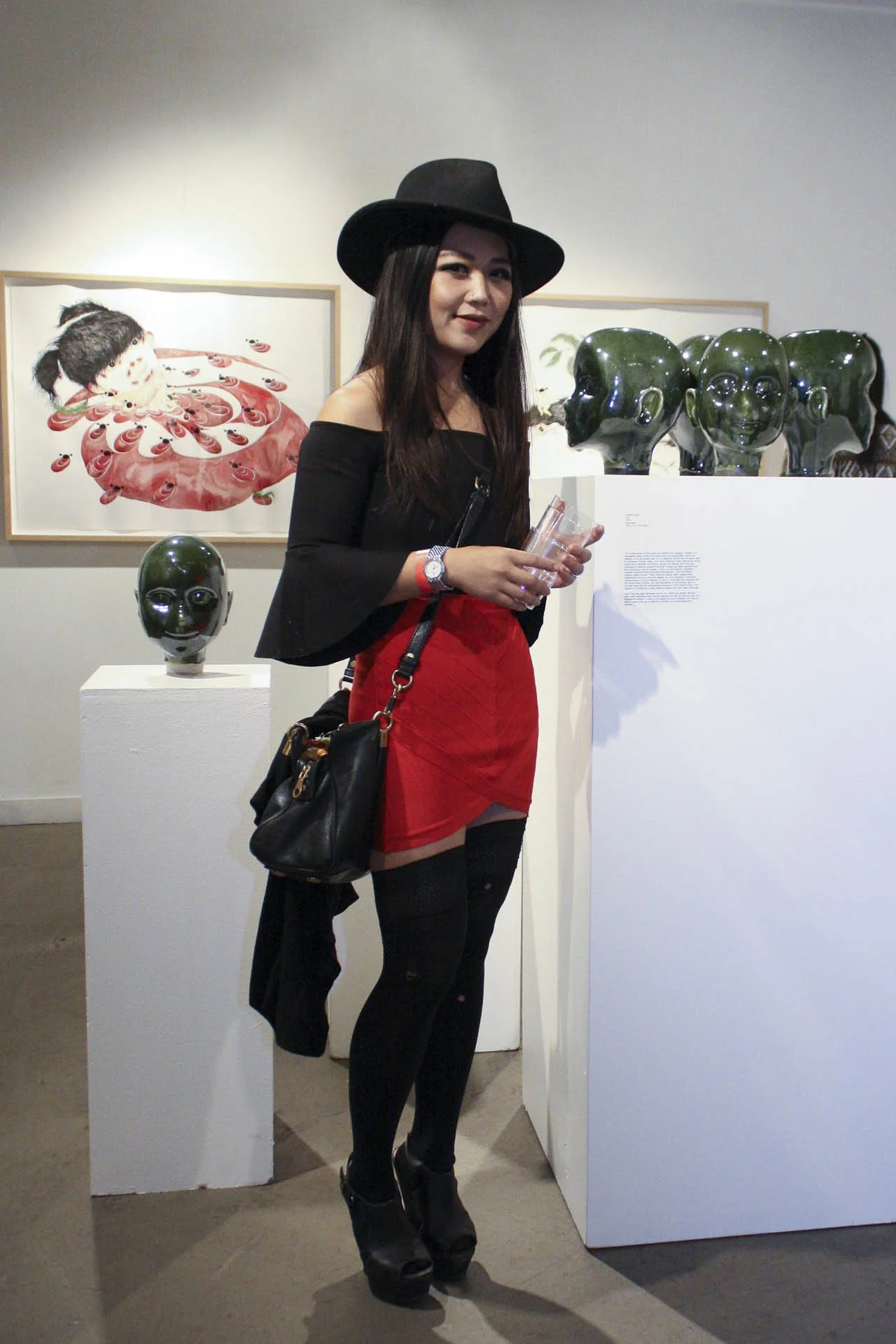
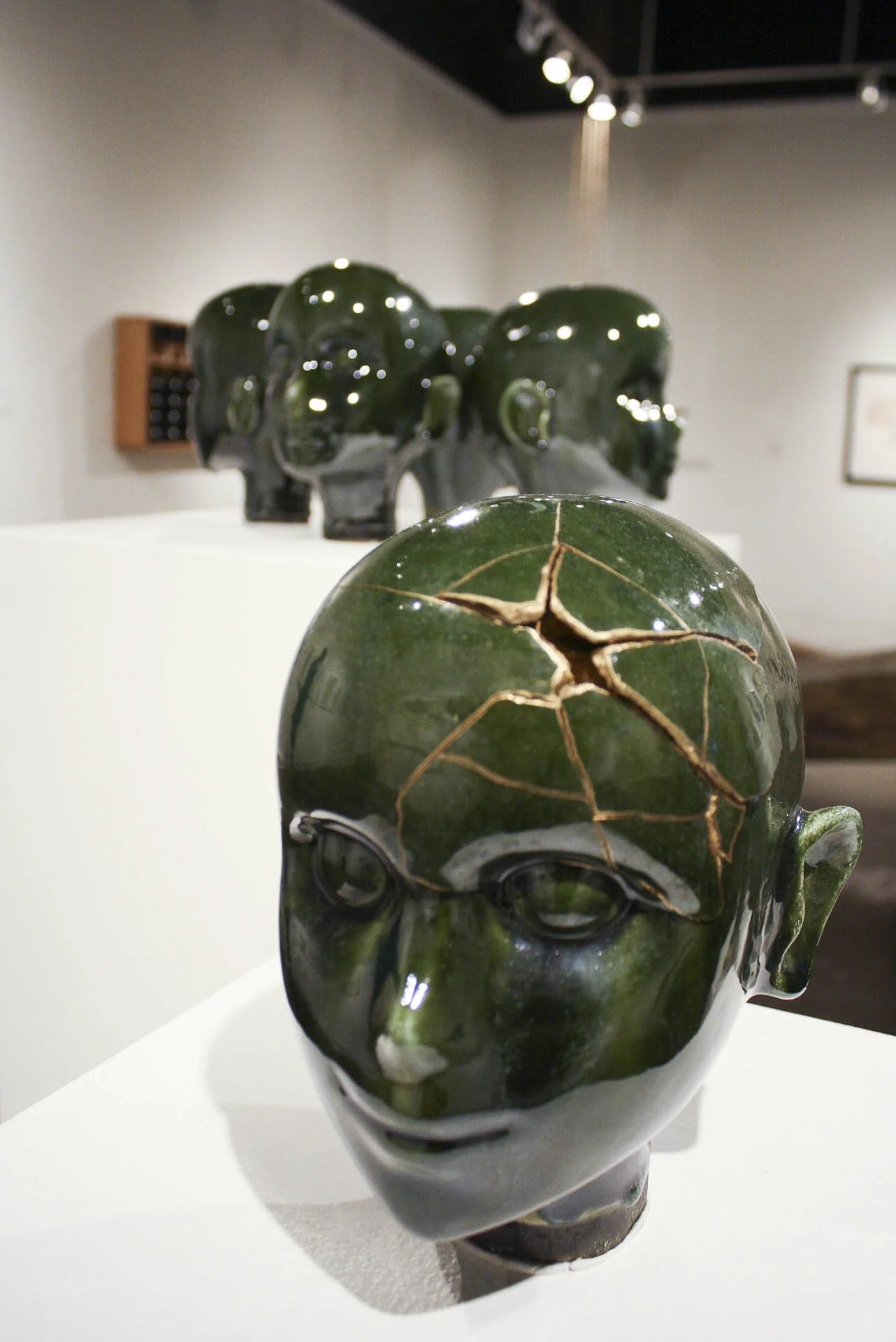
As I’ve been reflecting on the last few weeks of APAture, I’m brought back to my first year as the newly hired program manager at KSW in 2014. It was one day before our opening reception for APAture and our featured artist, Victoria Jang, was unboxing five fresh out the kiln ceramic heads with the most pristine celadon glaze on it. And then suddenly, crash.
APAture 2014 Photos (by Mido Lee)
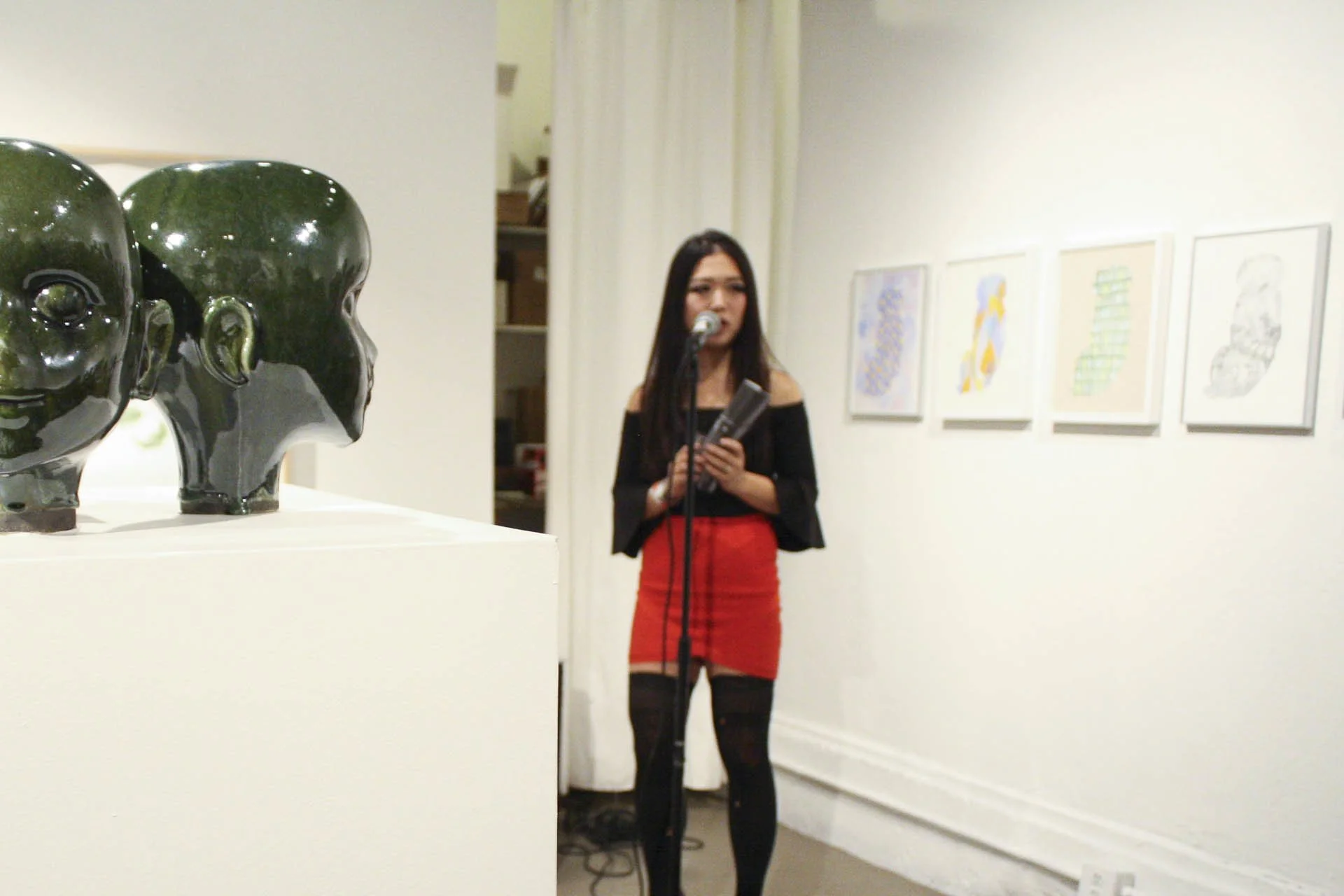
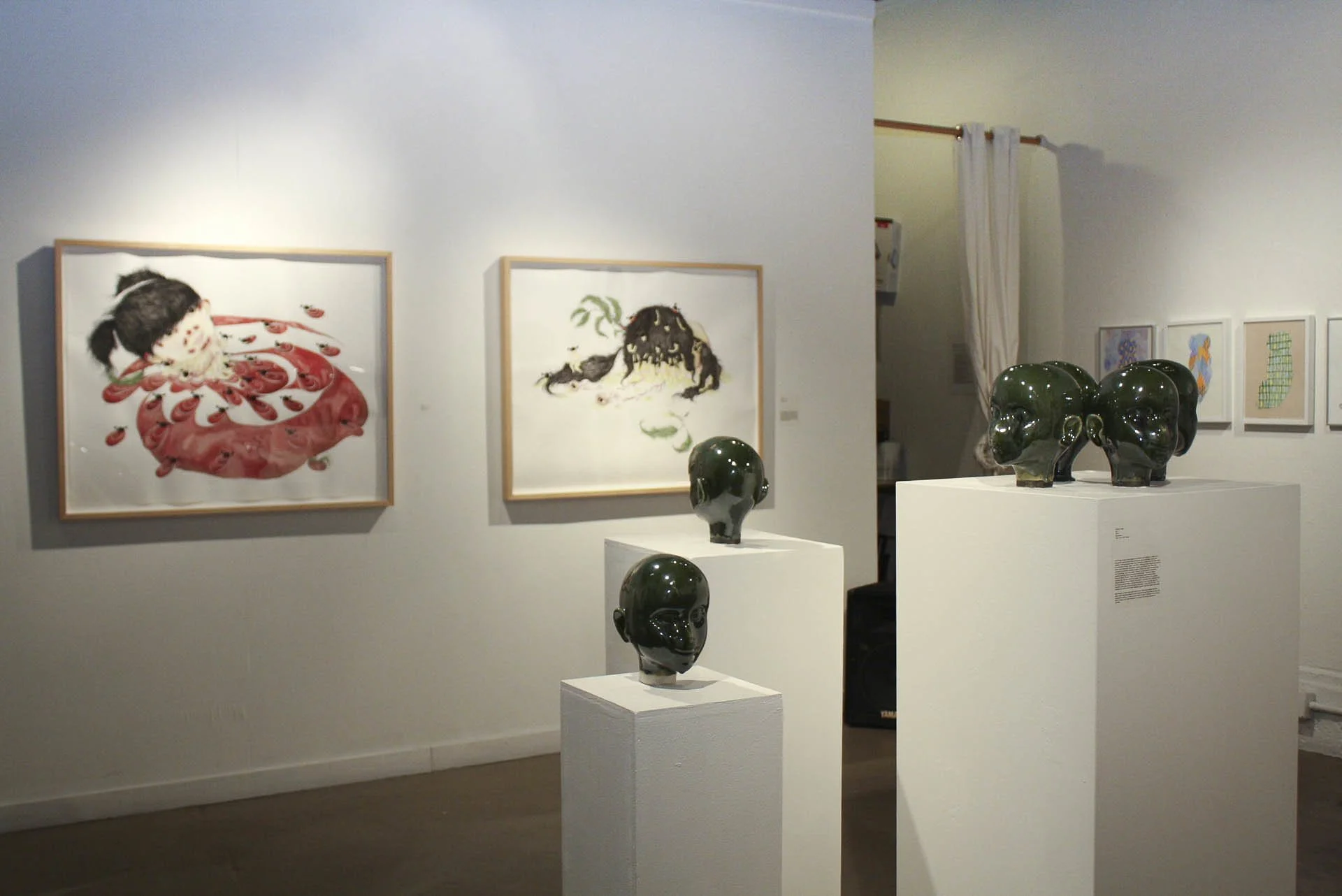
I also reached out to Victoria in prepping this episode and wanted to share some more of her thoughts around the artwork.
1. I believe the committee had originally requested your larger ceramic heads, but I'm guessing they weren't able to fit in the gallery. It seems like you had made those pieces just for the festival? Is that correct, and do you remember any details around what you had proposed when you had moved away from the larger ceramic heads?
Yes, I made those pieces specifically for the festival. Unlike the large-scale heads, which emerged from a more internal and intuitive exploration of self, this project was driven by external forces: the everyday, the industrial complex, and the systems that shape how we make, produce, and consume.The project also brought the everyday into question: the never-ending struggle to feel as though you've accomplished enough in a day, alongside the deeper question of whether what we produce determines how we measure our own worth. Scale provides significance through confrontation; the work occupies space and demands your presence. Working at a different scale challenged me to find other ways to overwhelm the senses. I began thinking about numbers and mass over the singular object, and volume over the individual, as alternative ways to create visual and physical impact. This also became a way to reconsider my own production processes: how to expedite them, increase efficiency, and get more out of my time.
The work became a way for me to think through these parallels and question what we consider advancement, and what might instead be an erosion of human creative and critical capacity. I'm interested in the contradictions between our desire to optimize time and consumption, the ego of mass production, and the pressure to visually feed—to continually produce more work, more images, and more things to satisfy an ever-growing appetite for visual consumption. In that sense, the project wasn't simply about producing multiples or working more efficiently. It was also about questioning the systems and desires that make us feel compelled to do so, and how that same logic affects our creative capacity, our identity, and our sense of oneness.
2. Do you recall any part of how you processed how to adapt your installation when the head initially broke?
I think I had only that day to figure it out, considering it happened the day before the opening. My instincts went into overdrive, and without much time or many means, I had to make something happen from absolutely nothing. Looking back, I think my ability to respond to that situation came from experiences growing up and having to assimilate both inside and outside the home through language, culture, and customs. I tend to take these humble experiences for granted, but they taught me how to find substitutions, recognize analogs, and problem-solve with whatever was available. I think those moments stay with you in significant ways, becoming tools that lie dormant until they are needed in more critical moments.
I think of Lucy Lippard’s theoretical term “positive fragmentation,” in which fragments are rearranged to create new possibilities and meanings. For me, the act of adapting the installation echoed this process: working with what was broken or unavailable, finding substitutions, and assembling them into something that could carry new meaning. This also mirrors the fractured nature of the domestic and my experience growing up with a homemaker—my immigrant mother. Although the artist in me lay dormant as a child, my adolescent observations were being archived, gathered, and pieced together. Over time, I have reinterpreted those fragments into new meanings, transforming the experiences of survival and assimilation into a defiant, monumentalizing form of identity and preservation.