
The I-Hotel
text by Colin Kimzey from the 2023 exhibition, Dreaming People’s History, at the San Francisco Public Library
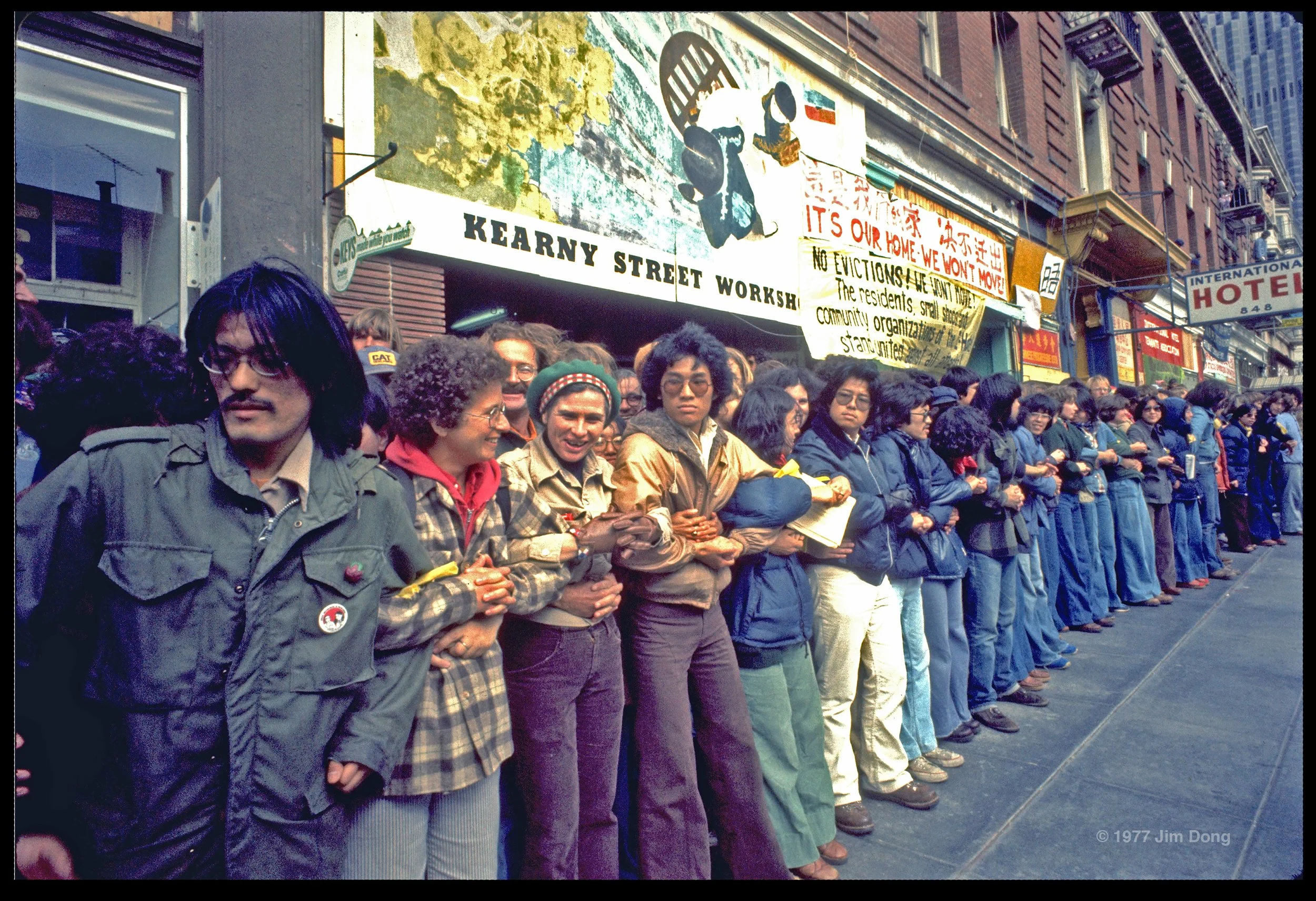
phot by Jim Dong
Kearny Street Workshop’s first home was the International Hotel, a residential hotel on the corner of Jackson and Kearny Streets. The last remnant of San Francisco’s Manilatown, the “I-Hotel” became the center of a citywide movement when its elderly Filipino and Chinese tenants were served eviction notices in 1968. Asian American radicals flocked to the cause of these working class elders, who had themselves been active in the radical labor movements of the 1930s. In 1972, Kearny Street Workshop moved into the ground floor alongside the Asian Community Center, the Chinese Progressive Association, and the I-Hotel Tenants Association. All were evicted with the residents on August 4, 1977, when mounted sheriff’s deputies bludgeoned their way through a human chain ringing the hotel. To this day, the decade-long struggle is a fixture in the Asian American radical imagination; the eviction is commemorated every year at the site, which in 2005 was rebuilt into a new International Hotel and Manilatown Center.
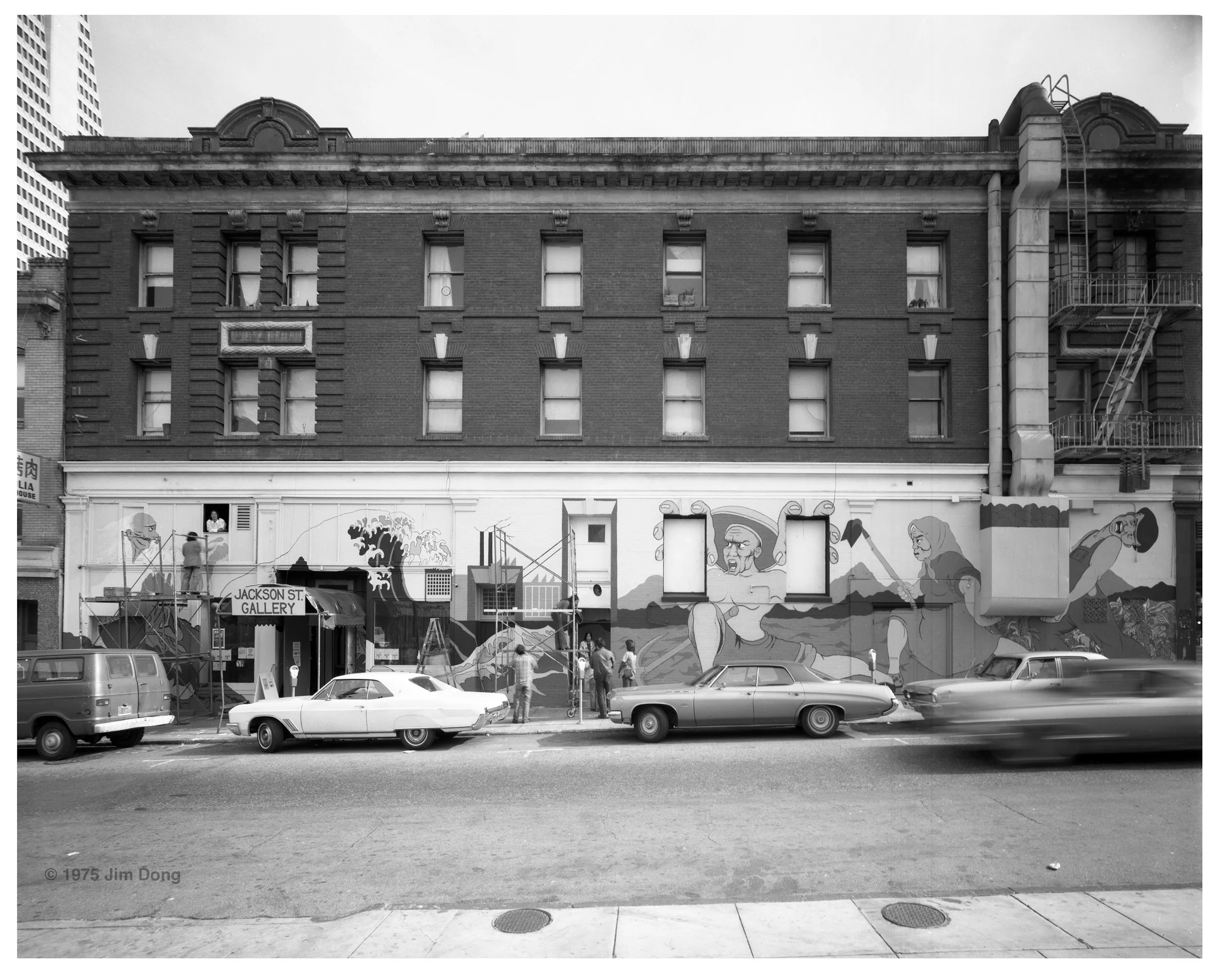
International Hotel mural, ca. 1975
Photograph & Mural by Jim Dong
Known as the “Jackson Street Gallery Mural,” painted as part of the new gallery’s first exhibition, People In Need of Their Own Housing (PINOTOH): An Exhibit of the International Hotel
Depicts Asian peasants engaged in agricultural labor, reflecting the I-Hotel’s history as a resting place for seasonal farmworkers; also meant to show tourists where their cheap Chinatown meal came from (one figure was supposed to literally hold a mirror to passerby but the muralists couldn’t afford the glass)
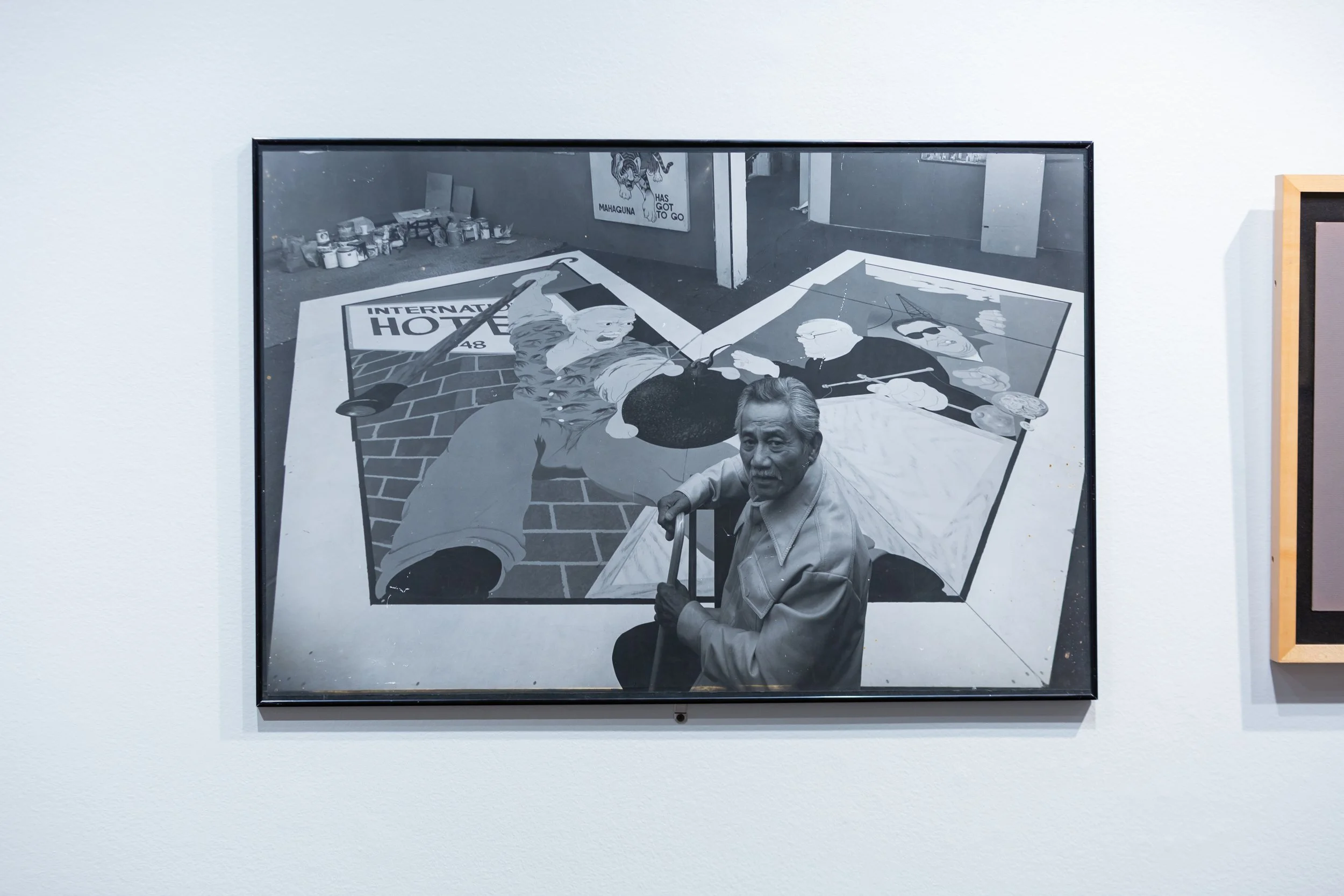
Felix Ayson and The Struggle for Low-Income Housing, ca. 1976
Photograph on poster board
Mural by Jim Dong & Nancy Hom
The Struggle for Low-Income Housing was a portable mural created for the SFMOMA’s US Bicentennial show People’s Murals: Some Events in American History
Felix Ayson, in the foreground of the photo and portrayed on the left side of the mural, was a radical anticapitalist tenant leader who had organized for the United Farm Workers and Alaska Cannery Workers; his image (also on the cover of We Won’t Move) became a symbol for the anti-eviction struggle
Ayson opposes landlord Supasit Mahaguna and Judge Ira Brown, a landowner himself who authorized eviction that year
The Transamerica Pyramid represents the encroaching Financial District as well as the Transamerica Corporation’s role in brokering the secret sale of the hotel to Mahaguna
Ayson’s hand holding the wrecking ball was meant to mirror the central image of Diego Rivera’s Man at the Crossroads, the socialist fresco famously destroyed before it could be completed at Rockefeller Center